How Long Does It Take to Get an ADU Permit in Los Angeles? A 2026 Timeline Breakdown
If you have heard that new California laws make building backyard homes instant, you have been given only half the story. While regulations are friendlier than ever, getting the green light from the City of Los Angeles is still a marathon rather than a sprint. In practice, most homeowners in 2026 should budget for a realistic timeline of four to eight months before they can legally break ground.
Think of this process less like buying a product and more like getting a complex permission slip signed by a strict principal. That principal is the Los Angeles Department of Building and Safety (LADBS), and their primary job is to ensure your future tenants are safe from fire and earthquake risks. Your architect submits the blueprints, and city engineers review them to catch safety issues before a single hammer swings.
This review phase is officially known as “Plan Check,” but it is rarely a simple checklist. It operates more like a rigorous peer review cycle: the city flags errors, your team fixes them, and the documents go back for another look. Industry data suggests that even simple garage conversions often require two or three rounds of these corrections before the city is fully satisfied with the design.
Once every department finally signs off, you reach the holy grail of the pre-construction phase: RTI, or “Ready to Issue.” This is the moment your paperwork converts into a physical permit card. Planning your financing and construction start date requires analyzing exactly where those months go and how to navigate the system efficiently.
Why Your 2026 ADU Project Starts with an 8-Week ‘Design and Prep’ Sprint
Before the city ever sees your application, your architect needs about 4 to 8 weeks to translate your vision into a language the Department of Building and Safety (LADBS) understands. This is the estimated time for ADU architectural drawings, and rushing this step is the most common cause of future delays. You aren’t just sketching a floor plan; you are assembling a complex technical manual that proves your backyard cottage won’t catch fire or collapse. If your property is on a hillside or has unique topography, this timeline might extend as you wait for a professional surveyor to map out the exact contours of your land.
Detailed site plans must account for strict zoning requirements for accessory dwelling units in LA, specifically “setbacks”—the mandatory distance between your new structure and your property line. While state laws have reduced these distances (often to just four feet), your drawings must show exactly where the new walls sit relative to your neighbor’s fence. Additionally, California requires Title 24 energy calculations. Think of this as an energy efficiency report card; a specialized consultant must certify that your windows, insulation, and lighting meet the state’s rigorous green energy standards before you can submit.
A successful “complete” submittal package usually includes four key components:
- Architectural Plans: Floor plans, elevations, and framing details.
- Site Plan: Shows the ADU’s location, setbacks, and utility connections.
- Structural Calculations: Engineering math proving stability.
- Title 24 Report: Energy compliance documentation.
While this custom route offers design freedom, it is time-intensive. If speed is your priority, you might consider skipping the custom design phase entirely.
Skipping the Line: How LADBS Pre-Approved Standard Plans Save 8-12 Weeks
If the 8-week design phase sounds daunting, Los Angeles offers a strategic shortcut known as the Standard Plan Program. These are architectural blueprints that the city has already reviewed and accepted for structure and safety compliance. By selecting one of these LADBS standard plans, you effectively purchase a “Fast Pass” for the review line, bypassing the lengthy structural engineering and architectural checks that bog down custom projects. This approach targets homeowners who prioritize timeline over a unique, one-of-a-kind footprint.
Choosing a pre-vetted design is how to speed up ADU permit approval most effectively, often shaving between 8 to 12 weeks off your timeline because the heavy lifting regarding building codes is already done. While you cannot alter the shape or size of the structure, many vendors allow for cosmetic customization, such as choosing different siding or window finishes to match your main house. However, realize that “pre-approved” doesn’t mean “instant approval.” The city still requires a site-specific review to ensure the foundation works with your soil and that the structure fits within your backyard setbacks.
Even with pre-approved ADU plans in Los Angeles, you still must navigate the specific demands of your property’s geography. For those who stick with a custom design to maximize every inch of their lot, the road ahead involves a rigorous back-and-forth dialogue with city plan checkers. This administrative negotiation is where the majority of project stalls occur.
Once your architect submits the blueprints, you enter the “Plan Check” phase, which many homeowners mistake for a quick administrative stamp. In reality, this stage functions more like a strict academic peer review where a city official measures your drawings against thousands of safety codes. You will almost certainly receive a “Correction Sheet”—a formal list of required fixes—rather than an immediate approval. This back-and-forth cycle is standard; receiving a correction notice doesn’t mean your project is failing or that you hired the wrong team, only that the design is being refined for public safety.
Navigating this ADU permit process requires patience, as the typical custom project undergoes two to three rounds of revisions before approval. If you find yourself asking, “Why is my ADU permit taking so long?” the answer often lies in the “re-submittal” gaps; every time your architect submits fixes, the city takes several weeks to review them again. To minimize these loops and keep your LADBS plan check timeline on track, ensure your design team double-checks these common triggers for rejection:
- Fire-Rating Requirements: Ensuring exterior walls near property lines use specific fire-resistant materials.
- Energy Calculations: Proving the unit meets California’s strict “Title 24” energy efficiency standards.
- Site Plan Discrepancies: Matching the drawn lot lines exactly with official city survey records.
Getting the final nod on your blueprints leads to the “Verification” stage, where the plan checker confirms all corrections are made. However, a verified plan is not a permit in hand. While the Department of Building and Safety may be satisfied with your structure, your project cannot reach “Ready to Issue” status until you satisfy the external utility agencies waiting in the wings.
The Hidden Speed Bumps: Why LADWP and Fire Department Clearances Add 60 Days
Even after your blueprints pass the structural review, you cannot pull your permit until you obtain “agency clearances.” Think of this as a sign-off sheet where Water & Power and the Fire Department verify your project won’t disrupt their infrastructure. While the building department cares about your walls standing up, these agencies care about the surrounding environment. This phase frequently adds unexpected weeks to the timeline.
The most notorious bottleneck involves LADWP delays related to power lines. If your ADU sits too close to overhead wires, you are “encroaching” on their easement space. Unlike a code fix your architect can handle quickly, resolving an encroachment issue might require moving power lines or redesigning your roofline. Smart homeowners submit a review request to the utility company months before permitting starts.
Underground infrastructure creates similar hurdles regarding ADU utility connection requirements Los Angeles enforces for detached units. If your structure is too far from the street, gravity won’t help move wastewater, forcing the installation of expensive pumps. Simultaneously, the Fire Department requires a dedicated pathway for emergency personnel, meaning your narrow side yard must remain clear of A/C units to allow for stretcher access.
Securing these approvals requires navigating various municipal counters, making Los Angeles Department of Building and Safety appointment scheduling critical. While complex custom builds must endure this full clearance circuit, certain simple projects can bypass the bureaucracy. If you are converting a standard garage rather than building from scratch, you might qualify for a streamlined path known as the Express Permit.
Expediting Your Approval: Using Express Permits for Simple Garage Conversions
For homeowners dreading a six-month wait, the Express Permit track offers a legitimate shortcut through the bureaucracy. This isn’t a loophole; it is a specific administrative lane designed for projects that are straightforward enough for immediate review. While a new backyard structure requires complex engineering analysis, utilizing an existing shell relies on known variables. If your project fits the mold, you can bypass the intake queue and potentially secure approval in a single visit through an over-the-counter (OTC) review.
However, the city remains strict about which LADBS express permit qualifying projects gain access to this fast lane. The golden rule is that you generally cannot alter the building’s footprint or structural integrity. To navigate the accelerated garage conversion permit process LA residents favor, your plans must strictly adhere to these limitations:
- No additional square footage or expansion of the existing perimeter.
- No alterations to load-bearing walls, roof pitch, or trusses.
- No structural steel beams or complex grading work.
- Standard wood-frame construction on a flat lot.
Securing this speedier timeline requires proactive coordination. You must schedule an in-person appointment at a Development Services Center, where a plan checker reviews and stamps your drawings while you wait. Even if your specific ADU permit Los Angeles application is too complex for this counter service, you aren’t entirely at the city’s mercy. New state mandates have set hard clocks on how long the city can legally delay your project.

How California’s 2026 Legal Landscape (SB 13 & SB 9) Forces 60-Day Approvals
While over-the-counter reviews handle simple retrofits, custom builds often face longer queues. Fortunately, state legislation creates a rigid safety net for these timeline expectations. Under Senate Bill 13, the power dynamic in California ADU law vs Los Angeles city ordinances has shifted significantly; the state now mandates that local agencies must approve or deny your application within 60 days of a complete submission. This prevents the department from sitting on your paperwork indefinitely, effectively turning a bureaucratic black hole into a regulated process where the clock ticks against the city, not just the homeowner.
This legal pressure functions through “ministerial review,” a standard that fundamentally changes how a planner evaluates your blueprints. Instead of a subjective process where neighborhood character or discretionary opinions might derail the project, the impact of SB 13 on Los Angeles ADU processing forces an objective decision. It works like a technical checklist rather than a negotiation: if your design meets the hard numbers for height, setbacks, and safety, the city is legally obligated to issue the permit without requiring public hearings or neighbor approval.
Homeowners must be careful, however, not to misinterpret this 60-day limit as a guarantee of a two-month turnaround. The legal timer pauses, or “tolls,” the moment the city issues a correction letter returning plans to you for revisions. The clock only resumes once you resubmit the corrected documents, meaning a slow response from your architect effectively freezes the countdown. Recognizing this specific dynamic is crucial before you start budgeting for time and money: calculating permit fees and appointment wait times.
Budgeting for Time and Money: Calculating Permit Fees and Appointment Wait Times
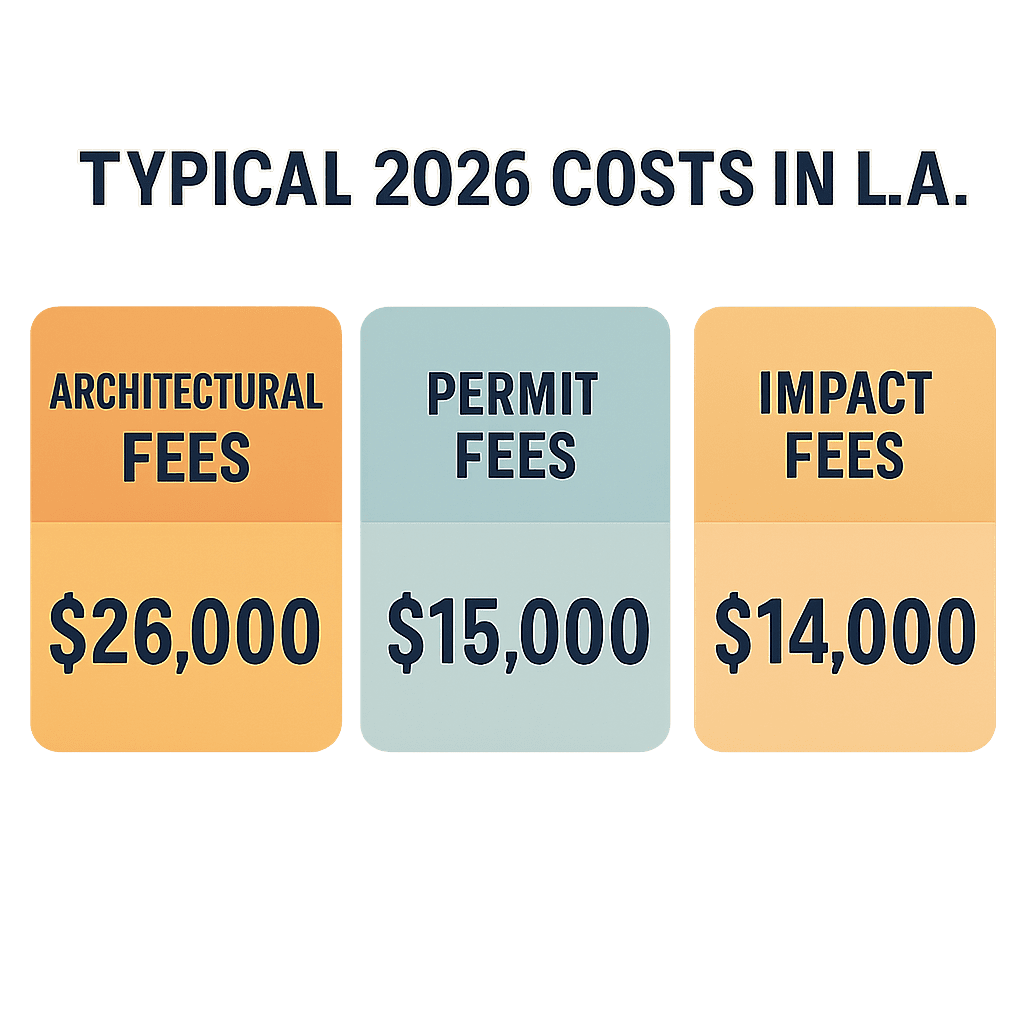
Most homeowners diligently budget for lumber and labor but are often blindsided by the “soft costs” of getting permission. In Los Angeles, the price of approval includes Plan Check fees—paying city engineers to review your drawings—and potentially Impact Fees, which fund local parks and schools if your unit exceeds 750 square feet. Current ADU permit fees Los Angeles 2024 estimates suggest setting aside $3,000 to $8,000 for these administrative costs alone, ensuring you aren’t scrambling for cash when the city is finally ready to stamp your plans.
Navigating the logistics of submission consumes just as much capital as the fees themselves. Securing an in-person appointment with LADBS often requires a two-week lead time, and a simple paperwork error can reset that wait. To avoid this frustration, many owners weigh the ROI of hiring an ADU consultant in Southern California or a “Permit Runner.” These professionals charge a fee to manage the bureaucratic legwork, effectively trading money to save you hours of standing in line at the metro office.
Structural realities can also inflate your initial estimates significantly. For example, garage conversions frequently trigger mandatory seismic retrofitting for Los Angeles ADUs, requiring specific engineering upgrades to ensure the old structure meets modern safety standards.
With your budget clarified and your team assembled, you are ready to navigate the final hurdles in From RTI to Breaking Ground: A Final 4-Step Checklist for Your ADU Permit.
From RTI to Breaking Ground: A Final 4-Step Checklist for Your ADU Permit
Navigating the LADBS maze transforms you from a hopeful homeowner into a capable project manager. Reaching the RTI – Ready to Issue status means the city has finally signed off on your design, validating that your plans meet every safety and zoning standard. The waiting game is over, but the final verification sprint remains.
Before you can officially break ground, you must clear the counter with these final administrative moves:
- Have your general contractor verify their active license and workers’ compensation insurance with the cashier.
- Pay the remaining permit issuance fees and applicable school development fees.
- Pull separate “supplemental” permits for necessary electrical, plumbing, and solar work.
- Secure your official “Job Card” to post on the job site immediately.
Mastering these milestones is the ultimate strategy on how to speed up ADU permit approval and avoid last-minute confusion. You have successfully graduated from the paper chase; now, your focus can shift to managing the physical ADU construction timeline and watching your new living space rise from the backyard soil.

Jason Somers, President & Founder of Crest Real Estate
With over 15 years of professional experience in the Los Angeles luxury real estate market, Jason Somers has the background, judgement and track record to provide an unparalleled level of real estate services. His widespread knowledge helps clients identify and acquire income producing properties and value-ad development opportunities.
Learn more about Jason Somers or contact us.