Understanding Deck Construction Permits: A Guide
Picture it: sunny afternoons and weekend barbecues on your beautiful new deck. It’s an exciting home improvement project, but one little word can make it feel daunting: ‘permit.’ It sounds complicated, but understanding when you need a permit for a deck is simpler than you might think. This guide shows that a permit isn’t a hurdle—it’s your most important tool for building a safe, valuable deck.
While specific rules vary by town, most jurisdictions use a common-sense deck permit requirements checklist. According to common building standards, you will almost certainly need a permit if your project meets any of these conditions:
- It will be more than 30 inches above the ground at any point.
- It is attached directly to your house (often with a “ledger board”).
- It is larger than 200 square feet (the size of a 10×20 foot deck).
- It will have a roof.
Essentially, the project’s scale and complexity matter most. For instance, a simple 8×10 foot floating platform that’s only a foot off the ground might not need a permit, but a 12×16 foot deck bolted to your back door almost certainly will. Knowing which category your project falls into is the first step toward a smooth, successful build.
How to Find Your Local Building Department (and What to Ask)
Now that you know a permit is likely in your future, your next step is to go straight to the official source. In nearly every town or county, this is the local “Building Department,” sometimes called the “Planning Office” or “Department of Community Development” — ie. the Los Angeles Department of Building and Safety. The quickest way to find yours is with a simple online search for a phrase like “[Your Town Name] deck permit,” which will almost always lead you directly to their website and contact information.
A brief, friendly phone call to this office can save you hours of guesswork. Don’t feel intimidated—the staff there handle these exact questions from homeowners every day. Simply explain that you’re planning to build a deck and want to understand the requirements. They are the single best resource for getting accurate information that applies specifically to where you live, rather than relying on generic advice.
To make the call effective, ask for three key items: where to find the permit application form, if they can provide a fee schedule, and most importantly, if they have a checklist of all the documents required for a deck project. This simple request gives you a clear roadmap and tells you exactly what you’ll need to gather.
What Do I Need for a Deck Permit Application?
After contacting your building department, you’ll find their requirements aren’t a mystery. Most permit applications boil down to three key items: the official application form itself, a site plan, and a set of construction drawings. While the form is straightforward, the plans are where you’ll need to provide specific details about your project.
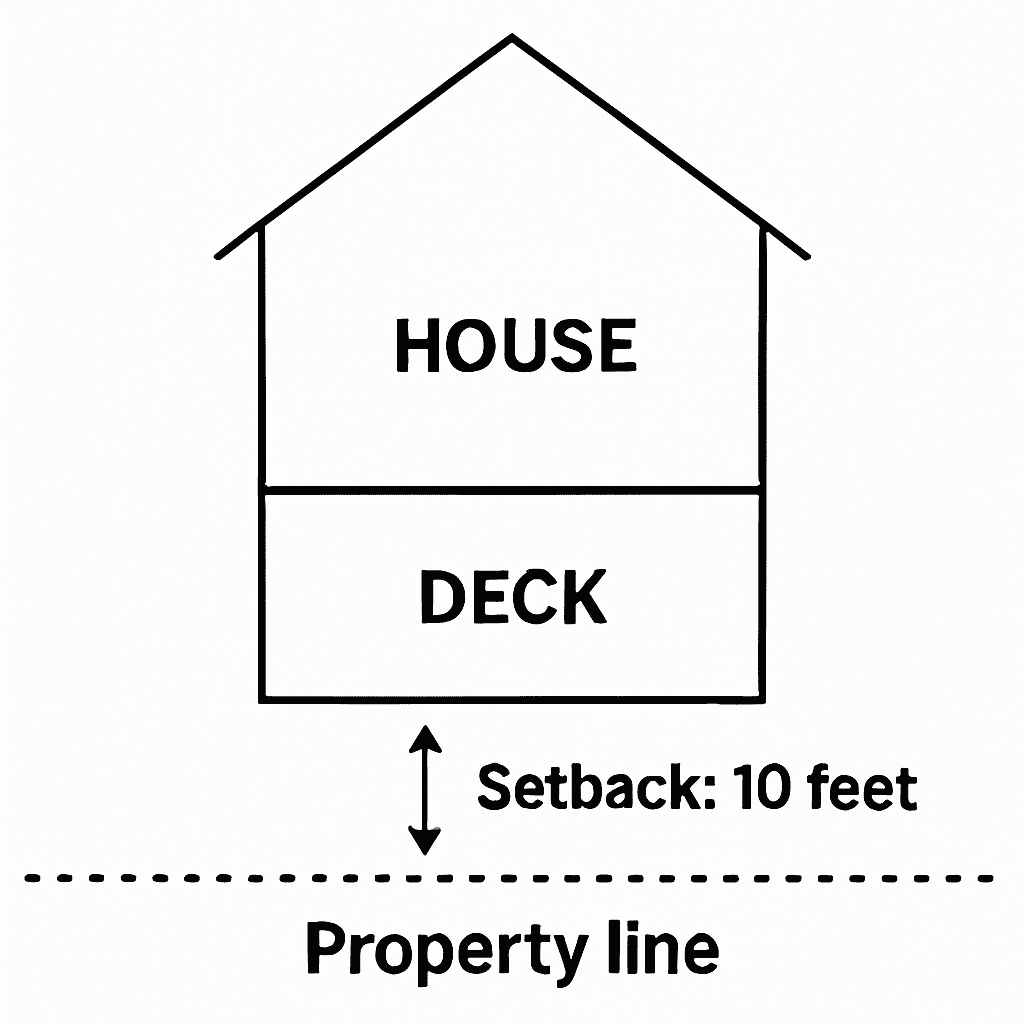
First, you’ll need to show where the deck will go with a site plan. Think of this as a simple, bird’s-eye-view map of your property. It doesn’t have to be professionally drafted for most projects; a clear, hand-drawn sketch is often acceptable. This map must show your property lines, the location of your house, and a clear outline of the proposed deck. The critical piece of information here is the setback, which is the required “no-build” distance between your deck and your property lines. These zoning laws for residential decks ensure everyone has adequate space and privacy.
Next comes the how: your construction drawings. These are the blueprints that show exactly how your deck will be built. Your deck construction plans for a permit must illustrate the key structural components, like the size of the posts and beams, the depth of the concrete footings, and how the railings will be secured. This isn’t just red tape; it’s how the building inspector verifies that your design is strong, safe, and built to last.
While this might sound intimidating, remember the goal is safety, not complexity. For a standard deck, these plans can be relatively simple. If you hire a professional deck builder, they will typically create and submit these plans for you as part of their service, which can be a major stress-saver.
The Hidden Costs and Timeline for a Deck Permit
Now that you know what plans are needed, you’re likely wondering about the cost and time involved. The total cost to get a deck permit is more than just the fee paid to your city, which is often a modest amount based on project value. The real variable is the cost of creating your construction drawings. For a simple, standard deck, you might be able to draw these plans yourself. However, for more complex designs, you may need to hire a professional, which can add to your upfront expense.
Some projects require what are known as engineered drawings for deck approval. If your deck has an unusual shape, is very high off the ground, or will be built on a steep slope, your building department will likely want a licensed engineer or architect to create and stamp the plans. This is a safety measure to guarantee the design can handle the unique structural stresses, providing an essential layer of assurance for a non-standard build.
Finally, you’ll need to factor in the approval timeline. Wondering how long does a deck permit take? The answer varies widely. A simple, well-prepared application for a standard deck might be approved in just a few days. A complex project requiring an engineer’s review, on the other hand, could take several weeks or even over a month. The best advice is to submit your application well before you plan to break ground, ensuring the paperwork doesn’t delay the first day of construction.

What Are Deck Inspections and Why Do They Matter?
Getting your permit approved isn’t the final step; it’s the green light to start building. As part of the deck permit process, a city building inspector for decks will visit your site to ensure the work matches your approved plans. Think of them not as a critic, but as a second set of expert eyes confirming your investment is safe and built to last. This process typically involves two key visits.
The first and most critical check-up is the footing inspection. This happens after you’ve dug the holes for your deck’s support posts but before you pour any concrete. The inspector is verifying that the holes are deep enough to go below the local frost line—the depth to which the ground freezes in winter. This single step is vital, as it prevents the ground from pushing your deck upward and causing damage over time.
Once construction is complete, you’ll schedule your final inspection. Here, the inspector walks the finished deck to check for overall safety and stability. They will confirm that railings are secure, stairs are built correctly, and all connections are solid. It’s the last quality-control check to ensure the structure is safe for your family and guests.
Passing this last hurdle does more than just close out your permit; it provides official documentation that your deck was built correctly. This is your proof of a safe, compliant project, giving you peace of mind for years to come. But what happens if you skip this process altogether?
The Real Risks of Building a Deck Without a Permit
Tempting as it may be to skip the paperwork and save a few hundred dollars, building a deck without a permit can backfire spectacularly. If your project is discovered, you’ll likely face a significant fine, which is often double or triple the original permit fee, instantly erasing any initial savings. This penalty turns a simple oversight into a costly mistake, and it’s only the beginning of potential unpermitted deck problems.
Beyond financial penalties, your local building department has the authority to issue a stop-work order, legally halting all construction on the spot. Even worse, if the completed deck is deemed unsafe or doesn’t meet code, they can require you to tear it all down. Imagine watching your entire investment in time and materials get demolished because the proper steps weren’t followed from the start.
Even if you avoid getting caught during construction, the issue will almost certainly resurface when you decide to sell. Selling a house with unpermitted work is a major liability. A buyer’s inspector will flag the deck, causing deals to fall through or forcing you into expensive, last-minute fixes. This one shortcut can end up costing you a successful home sale.

Your Simple 3-Step Action Plan for a Worry-Free Deck Project
That complicated word, ‘permit,’ doesn’t have to be a roadblock to your backyard dreams. With a clear understanding of the process, you can build with confidence from the very first board. This manageable checklist empowers you to create a safe, valuable, and lasting addition to your home.
You’re ready to move forward. Here is your simple DIY deck construction checklist to begin:
- Use the 4-Point Checklist to confirm if you likely need a permit.
- Find your local Building Department’s website and download their application.
- Call them with any questions—they are there to help you succeed.
Following this process isn’t about satisfying bureaucracy; it’s about being a smart homeowner who builds something safe, valuable, and lasting. You’ve got this.

Jason Somers, President & Founder of Crest Real Estate
With over 15 years of professional experience in the Los Angeles luxury real estate market, Jason Somers has the background, judgement and track record to provide an unparalleled level of real estate services. His widespread knowledge helps clients identify and acquire income producing properties and value-ad development opportunities.
Learn more about Jason Somers or contact us.