Tree Removal Permits in Los Angeles: Protected Oak, Sycamore & Walnut Trees
Tree removal in Los Angeles is not always a simple hire-and-cut job. If the tree is a protected native species, a street tree, or part of a development project, you may need approval before any removal, relocation, grading, trenching, or root disturbance begins. This guide explains how Tree Removal Permits in Los Angeles (Protected Oak, Sycamore & Walnut Trees) work, which trees are regulated, and what property owners should prepare before applying.
Last reviewed: October 2026. This guide was prepared by the permitting team at Crest Real Estate, a Los Angeles permit expediting and entitlement firm that manages permits for residential projects from the Hollywood Hills to Bel Air and Beverly Hills. It is based on the Los Angeles Municipal Code and guidance from the City and County agencies that administer tree protection, combined with practical lessons from coordinating tree reports, grading reviews, and Urban Forestry clearances on real projects.
Do you need a permit to remove a protected tree in Los Angeles?
Yes, if the tree meets Los Angeles’ protected tree rules, you generally need a permit before removing or relocating it. The Los Angeles Municipal Code protected tree ordinance (LAMC Chapter IV, Article 6, Section 46.00 et seq.) requires approval from the Board of Public Works or its designated officer before a protected tree or shrub is removed or relocated, unless a specific exemption applies. The rule is broader than cutting down a trunk: “removal” can include actions that cause the tree to die, such as damaging roots, changing grade within the drip line, applying toxic substances, or operating equipment in a way that harms the tree.
That is why tree removal permits Los Angeles property owners search for often involve more than a tree service quote. Before work starts, you need to know the species, trunk size, location, whether the tree is on private property or in the public right-of-way, and whether a construction or grading project could affect the canopy or roots.
The protected trees Los Angeles regulates
The City’s protected tree list focuses on certain Southern California native trees and shrubs. A tree or shrub generally becomes protected when it measures at least four cumulative inches in diameter at 4.5 feet above ground level at the base. The City’s current protected tree list includes native oaks, Southern California black walnut, western sycamore, and California bay; protected shrubs include Mexican elderberry and toyon.
For many homeowners, the most common questions involve oak, sycamore, and walnut trees because these species are found in hillside neighborhoods, older residential lots, canyon areas, and development sites.
Protected trees commonly reviewed in Los Angeles include:
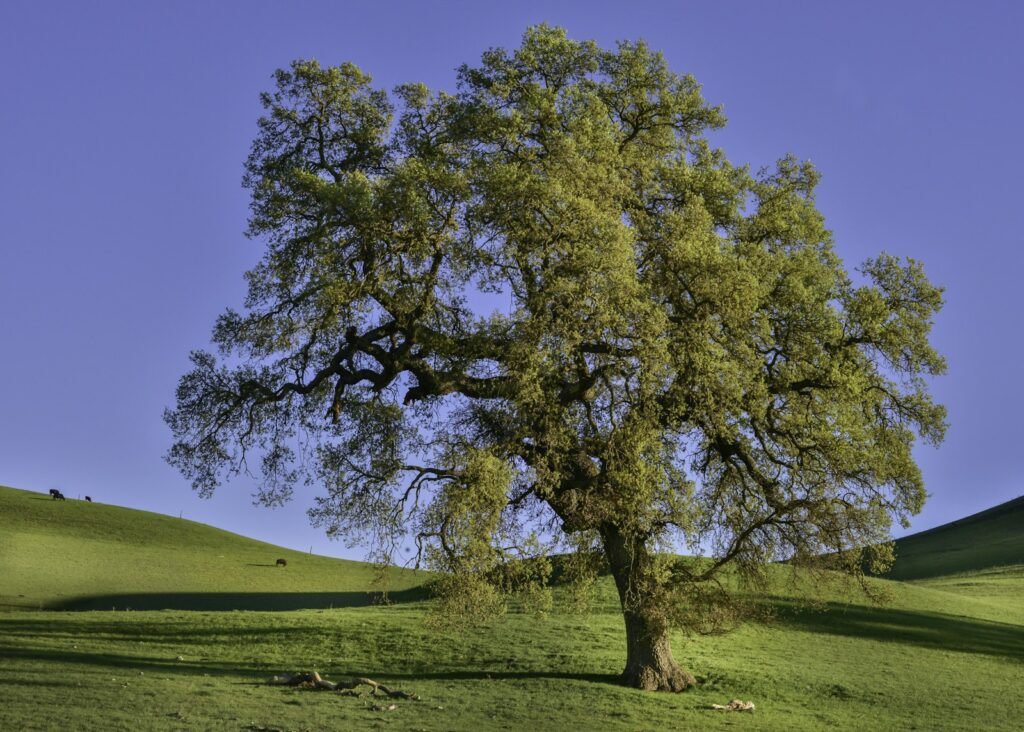
- Oak trees — including valley oak, California live oak, and other oak trees of the oak genus indigenous to California, but excluding scrub oak under the City definition.
- Southern California black walnut — a native species that may appear as a single tree or as part of remnant woodland habitat.
- Western sycamore — often found near drainage courses, canyons, slopes, and older landscapes.
- California bay — also included in the City’s protected tree definition.
- Protected shrubs — Mexican elderberry and toyon may also trigger review when they meet the size threshold.
The ordinance excludes trees or shrubs grown or held for sale by a licensed nursery and trees or shrubs planted or grown as part of a planting program. Still, if you are unsure whether your tree qualifies, it is safer to verify before pruning, cutting, trenching, or grading near it.
Protected does not always mean impossible to remove
A protected tree can sometimes be removed or relocated, but Los Angeles expects the applicant to justify why removal is necessary. Under the City ordinance, the Board of Public Works may grant a permit when required findings are met, including that the removal will not cause undesirable, irreversible soil erosion that cannot be mitigated. Approval may be possible when the tree prevents reasonable development of the property, has substantially declined and reasonable restoration is not advisable, or has an irreversible condition that creates a falling danger.
In practical terms, the City is looking for a documented reason, not a preference. “The tree drops leaves,” “it blocks a view,” or “it is inconvenient” may not be enough. Stronger applications usually explain the tree’s condition, the project constraints, preservation alternatives considered, and why relocation, redesign, or protection in place is not feasible.
Expediter’s tip: Commission a tree survey from a qualified arborist before the architect finalizes the site plan, not after. When protected trees, trunk locations, and drip lines are mapped from day one, the design team can often shift a footprint, driveway, or retaining wall to preserve a tree. That is usually faster and less costly than justifying a removal and planting four or more replacement trees.
The permit application usually starts with documentation
The City requires a permit application to show the location of each protected tree or shrub on a plot plan and identify which trees or shrubs are proposed to be retained, relocated, or removed. If grading may affect a protected tree or shrub, the grading permit plan must be submitted with the application.
For development projects, documentation may also come through City Planning. Los Angeles City Planning says discretionary applications that include changes to a building footprint, including demolition or grading permit applications, must include a Tree Disclosure Statement signed by the property owner. If protected trees or shrubs on the site, or trees in the adjacent public right-of-way, may be impacted or removed, a qualified tree expert must prepare a Tree Report.
A solid permit package often includes:
- Tree identification — species, trunk diameter, canopy spread, general health, and whether the tree is native and protected.
- Site plan or plot plan — tree numbers, trunk locations, drip lines, proposed work areas, and structures or grading limits.
- Arborist or qualified tree expert report — especially when health, hazard, construction impacts, or feasibility of preservation is part of the argument.
- Photos — clear images of the whole tree, trunk, canopy, visible defects, site constraints, and nearby improvements.
- Project explanation — why removal or relocation is requested and what alternatives were considered.
- Replacement proposal — if removal is requested, the City may require replacement trees or shrubs as a condition of approval.
Replacement trees are part of the approval conversation
Los Angeles can require replacement as a condition of granting a protected tree or shrub removal or relocation permit. The Municipal Code authorizes the City to require at least four replacement specimens of a protected variety within the same property boundaries, in a manner acceptable to the Board. A protected tree is to be replaced by protected tree varieties, not shrubs; a protected shrub is to be replaced by protected shrub varieties, not trees, to the extent feasible.
The code also states that replacement trees must generally be at least 15-gallon size or larger, measure at least one inch in diameter one foot above the base, and be at least seven feet tall from the base. The City may allow smaller or different protected species when the required size or species is unavailable, but it may require a greater number of replacements.
For property owners, this means tree cutting permits are not only about permission to remove. They can also affect landscape plans, irrigation, construction sequencing, and long-term site maintenance.
Fees, reviews, and possible hearings
Los Angeles permit fees can be significant. Current City code lists a nonrefundable protected tree or shrub permit application fee of $805.99, plus a nonrefundable inspection fee based on the number of protected trees or shrubs included in the application. The listed inspection fee is $2,892.48 for one or two protected trees or shrubs, $5,139.16 for three to five, $5,982.58 for six to ten, and $5,982.58 plus $1,070.76 for each set of up to five additional protected trees or shrubs above ten.
Because fees and procedures can change, applicants should confirm current amounts through the City before filing. It is also worth noting that the permit may go beyond staff review: when replacement concerns more than two protected trees or shrubs, the code says the permit at issue must be considered at a full public hearing at the Board.
Street trees and private protected trees are different issues
A tree on private property can still be protected if it meets the species and size criteria. A street tree, parkway tree, or tree in the public right-of-way may require a different City tree permit even if it is not one of the protected native species. The StreetsLA permit portal, run by the Bureau of Street Services and its Urban Forestry Division, includes tree removal, tree pruning, tree planting, tree root pruning, and Urban Forestry Division clearance options for building permits and protected tree impacts.
This distinction matters because many Los Angeles permits overlap. A homeowner may need one type of review for a protected oak in the backyard and another for a parkway tree affected by driveway, sidewalk, utility, or frontage work. If your project involves construction, demolition, grading, trenching, or access across the parkway, an encroachment permit may also be needed, so, confirm both private-property and right-of-way requirements before scheduling work.
Common mistakes that delay tree removal permits
Many permit delays come from incomplete or unclear information. Los Angeles reviewers need to understand exactly what is being removed, why it is being removed, and how the site will be protected or replanted afterward.
Avoid these mistakes before applying:
- Assuming a private tree is unregulated. Protected status can apply on private property.
- Starting grading before tree review. Root damage or grade changes within the drip line may count as removal if they cause the tree to die.
- Using vague species names. “Oak,” “walnut,” or “sycamore” may not be enough when the ordinance depends on specific native species.
- Submitting a plan without tree numbers. The City expects protected trees and shrubs to be identified by number on the plan.
- Ignoring redesign options. If the tree can be preserved by redesign, the City may deny a removal request.
- Forgetting replacement space. Replacement trees need room, water, and appropriate siting.
- Confusing City and County rules. The City of Los Angeles and unincorporated Los Angeles County have different ordinances and permit processes.
City of Los Angeles vs. unincorporated Los Angeles County
“Los Angeles” can mean the City of Los Angeles, another incorporated city, or an unincorporated area of Los Angeles County. That distinction changes which los angeles permits apply. LA County Planning states that the County Oak Tree Permit Ordinance applies to development that will impact oak trees in unincorporated areas of LA County.
County rules are not identical to City rules. LA County’s Oak Tree Permit materials say protected oak thresholds include 6-inch diameter oaks in Significant Ecological Areas, the Santa Monica Mountains Coastal Zone, and the Santa Monica Mountains North Area, and 8-inch diameter oaks in the rest of LA County, measured at 4.5 feet from mean natural grade. The County FAQ also notes that an Oak Tree Permit is required for proposed development involving larger branch or root pruning, encroachment within the protected zone, or removal of protected oak trees in unincorporated communities.
If the property is in Santa Monica, Pasadena, Glendale, Beverly Hills, Long Beach, or another city, check that city’s rules. Do not assume a City of Los Angeles approval applies outside City limits.
Illegal removal can affect building permits
Removing first and asking later can create serious consequences. Los Angeles code authorizes the Bureau of Street Services, after notice and hearing, to request that building permits be withheld for up to ten years and to revoke certain building permits where protected trees or shrubs were illegally removed or relocated. The Bureau considers factors such as the number, size, and age of trees or shrubs removed, the owner’s knowledge and intent, and prior violations.
That is a major risk for property owners, developers, and buyers evaluating a site. If a protected tree was recently removed, investigate permit history before assuming the property is ready for new construction.
A practical checklist before you cut
Before hiring a crew, take a careful pause. A short review can prevent fines, stop-work problems, replacement disputes, or delays in building permits.
Pre-removal checklist:
- Confirm whether the property is in the City of Los Angeles, unincorporated LA County, or another city.
- Identify the tree species and measure trunk diameter at the required height.
- Check whether the tree is on private property, in the parkway, or in another public right-of-way area.
- Document the tree with photos and a site plan.
- If construction is involved, identify grading, trenching, foundation, driveway, utility, and staging impacts.
- Consult a qualified arborist or tree expert when species, health, hazard, or construction impacts are unclear.
- Apply for the correct permit before removal, relocation, major pruning, or root disturbance.
- Keep copies of approvals, conditions, replacement requirements, and final inspection records.
Lessons from the permitting process
Tree issues are one of the most common sources of unexpected delay on hillside, infill, and remodel projects in Los Angeles. A few patterns come up again and again when protected trees are part of a site:
- Tree questions surface too late. Many owners learn a lot has a protected oak or walnut only after plans are drawn. Screening for protected trees during due diligence, before you close on a lot or commit to a design, protects both budget and schedule.
- Root zones matter as much as trunks. Foundations, retaining walls, utility trenches, and equipment staging inside the drip line can trigger review even when no tree is being cut down.
- Tree protection belongs on the plans. Showing protective fencing, no-storage zones, and arborist monitoring on construction drawings helps demonstrate that a preserved tree will survive nearby work.
- Conditions outlast the permit. Replacement plantings and maintenance conditions should be tracked through final inspection and documented so future owners can see what was approved.
Final takeaway
Tree removal permits in Los Angeles are designed to protect native trees that provide shade, habitat, slope stability, and neighborhood character. If your project involves a protected oak, Southern California black walnut, western sycamore, or another regulated species, plan the permit work early and document the reason for removal clearly. The safest path is simple: identify the tree, verify the jurisdiction, prepare the right plans and reports, and wait for approval before any cutting or root disturbance begins.
Sources referenced in this guide
- Los Angeles Municipal Code, Chapter IV, Article 6 — Preservation of Protected Trees and Shrubs (Section 46.00 et seq.), including protected species definitions, permit findings, replacement requirements, and penalties for illegal removal.
- Los Angeles Municipal Code fee provisions for protected tree and shrub permit applications and inspections.
- Los Angeles City Planning — Environmental Resources guidance on the Tree Disclosure Statement and Tree Report requirements.
- StreetsLA (Bureau of Street Services) Urban Forestry Division permit portal for street tree, parkway, and protected tree clearances.
- Los Angeles County Department of Regional Planning — Oak Tree Permit Ordinance and Oak Tree Permit FAQ for unincorporated areas.
Fees, thresholds, and procedures change. This article is general information, not legal advice. Confirm current requirements with the reviewing agency, a qualified arborist, or your permitting team before any tree work begins.
Frequently Asked Questions
Quick answers to the questions Los Angeles property owners ask most about protected tree permits, pruning, fees, street trees, and enforcement.
Under the Los Angeles Municipal Code, a protected tree or shrub generally measures at least four cumulative inches in diameter at 4.5 feet above the ground. Protected species include native oaks (excluding scrub oak), Southern California black walnut, western sycamore, and California bay, plus two native shrubs: Mexican elderberry and toyon. Trees grown for sale by a licensed nursery or planted as part of a planting program are excluded.
Light maintenance pruning is treated differently than removal, but the City defines removal broadly. Heavy branch cutting, root pruning, grade changes within the drip line, or anything else that could cause the tree to decline or die may be treated as removal and require approval. Before major pruning or any work near the roots, have a qualified arborist evaluate the tree and confirm requirements with the Urban Forestry Division.
City code currently lists a nonrefundable application fee of $805.99 plus an inspection fee based on the number of trees or shrubs. The inspection fee is $2,892.48 for one or two protected trees or shrubs and increases for larger applications. Budget separately for an arborist report, plans, and any required replacement trees, and confirm current fees with the City before filing.
Usually, yes. Street and parkway trees in the public right-of-way are managed by the City, and removing or pruning them generally requires a permit through StreetsLA even if the tree is not a protected native species. Projects that affect a driveway, sidewalk, or frontage may need both a street tree permit and a protected tree review.
Illegal removal can be costly. After notice and a hearing, the Bureau of Street Services may ask that building permits for the property be withheld for up to ten years and may revoke certain existing building permits. The City considers the number, size, and age of the trees removed, the owner’s knowledge and intent, and any prior violations. Replacement planting may also be required.

Jason Somers, President & Founder of Crest Real Estate
With over 15 years of professional experience in the Los Angeles luxury real estate market, Jason Somers has the background, judgement and track record to provide an unparalleled level of real estate services. His widespread knowledge helps clients identify and acquire income producing properties and value-ad development opportunities.
Learn more about Jason Somers or contact us.