5 Common Reasons ADU Permits Get Rejected in Los Angeles (And How to Avoid Them)
In the LA real estate market, a backyard home is a powerful investment—but only if it survives the city counter. Every week your designs spend trapped in the bureaucratic maze represents lost rental income and a climbing cost of ADU plan revisions. According to local industry data, homeowners routinely waste months stuck in the “Correction Loop,” a frustrating cycle where the city repeatedly returns blueprints for mandatory fixes.
Picture squeezing a new rental unit into a narrow lot in Echo Park, only to receive a “Correction Sheet” covered in red ink. Instead of panicking and asking why was my ADU permit denied, you should treat this document as a functional roadmap rather than a final rejection. In practice, most ADU permit rejections in Los Angeles stem from preventable oversights that simply need tweaking.
Recognizing exactly who reviews your paperwork helps navigate these hurdles. LA City Planning dictates what you can build based on neighborhood zoning, whereas Building and Safety ensures how safely you construct it. By mastering the core LADBS ADU plan check requirements before submitting, you can bypass this expensive loop entirely and get shovels in the ground.
The ‘Buffer Zone’ Blunder: Avoiding Setback Violations
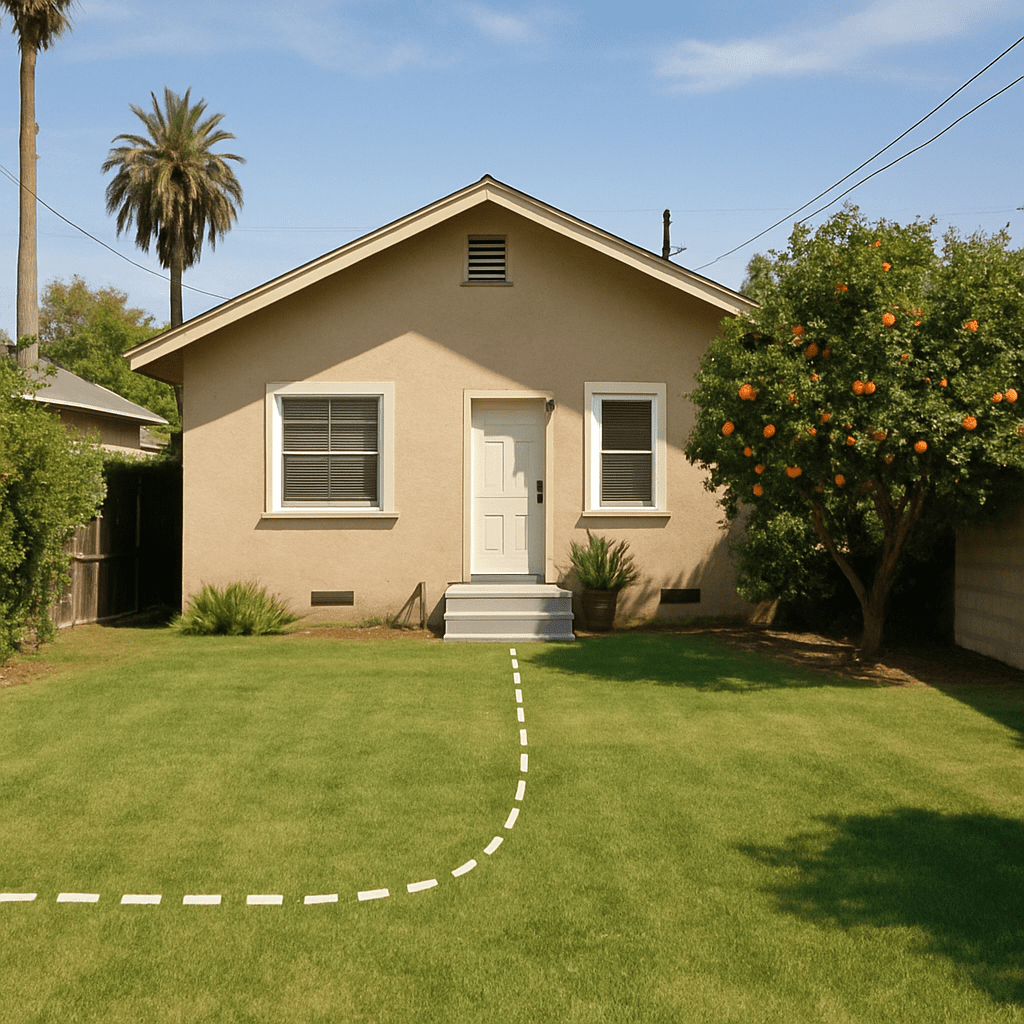
Looking at your backyard, it is tempting to assume your wooden fence marks the exact edge of your property. Unfortunately, fences naturally shift over decades, and relying on them causes easily preventable ADU setback violations. Under Los Angeles ADU zoning laws 2024, you generally need a four-foot “buffer zone” between your new structure and the legal property line for fire safety. Discovering your fence is off by six inches during plan check means learning how to fix ADU setback violations the hard way, often costing $5,000+ in architect redesign fees.
To protect your budget before sketching a single floor plan, you must verify your exact boundaries using this simple self-check:
- Check the plot map: Pull your official property records from the county to see the legal lot dimensions.
- Find the survey stakes: Hunt for the metal pins buried at the extreme corners of your lot.
- Verify the fence placement: Measure the distance from those official stakes to your physical fence to see the true difference.
Once you confirm this four-foot setback is measured from the actual property line, you have secured the horizontal footprint for your build. However, property boundaries are only half the placement puzzle. The next critical step is looking up and checking beneath your feet by Identifying the ‘Invisible Highways’: Utility Easements and Power Lines.
Identifying the ‘Invisible Highways’: Utility Easements and Power Lines
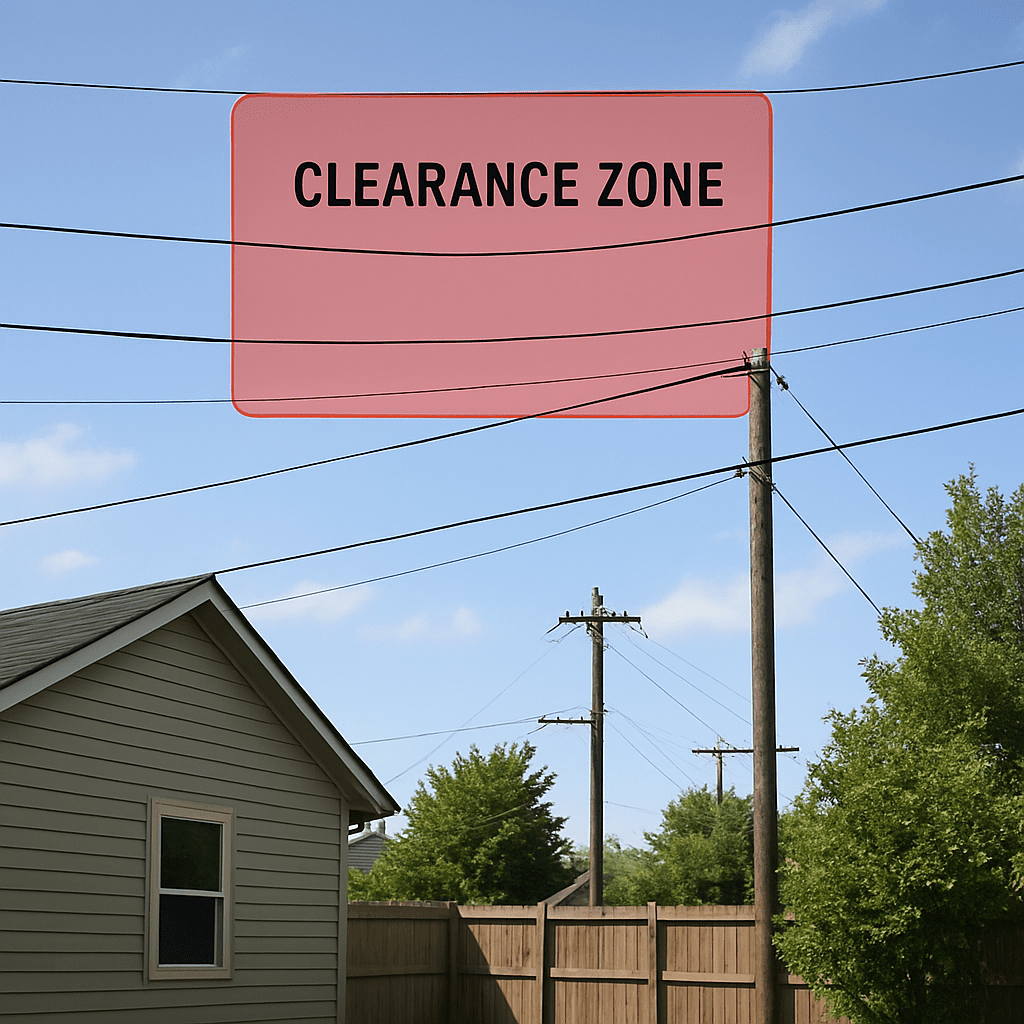
Go outside and look directly up from your planned ADU site. If your future roof sits beneath sagging wires, you will trigger strict LADWP ADU requirements regarding high-voltage clearance. The city mandates a strict safety radius around these lines to prevent severe fire hazards, and ignoring this vertical clearance zone during your planning phase will inevitably waste expensive architect fees on unbuildable designs.
Beneath the dirt lies another expensive trap: the utility easement. Even though you legally own the lot, city agencies hold an invisible highway through your yard to service the neighborhood. Building over this designated strip creates an encroachment, meaning utility companies possess the legal right to demolish your new structure if underground pipes need sudden repairs. Avoiding these ADU utility conflicts requires proactive research before pouring concrete.
To bypass these painful surprises, request a pre-design utility map from the city to reveal these hidden boundaries early. Mapping these vital lines dictates your safe building envelope and clarifies the ADU utility connection fees Los Angeles charges to join the main grid. With your overhead and underground boundaries secured, you must next evaluate any old backyard additions, leading us to the unpermitted ghost: handling existing non-conforming structures.
The Unpermitted Ghost: Handling Existing Non-Conforming Structures
Many LA homeowners inherit a quirky “bonus room” without realizing it lacks a paper trail. When submitting new plans, the city compares your property against the Certificate of Occupancy—the document proving a home is legally inhabitable. Spotting unpermitted existing structures that aren’t on this official record will instantly freeze your ADU application.
Resolving this roadblock means starting the unpermitted ADU legalization process to bring the rogue space into compliance. You can clear this hurdle in three steps: exposing hidden framing for inspection, upgrading materials to modern safety standards, and updating your legal floor plan. The city calls these unapproved add-ons “non-conforming” spaces, meaning they exist physically but not legally.
Proactively fixing these old discrepancies saves you from steep financial traps. If inspectors discover a shadow addition during a site visit, they issue a “Work Without Permit” citation that immediately multiplies your fees. Following the exact garage conversion permit requirements Los Angeles enforces before submitting your main application protects your budget from these painful penalties and endless revision cycles.
Clearing your property’s legal history ensures your new build rests on fully approved paperwork. Once your existing footprint is completely authorized, the focus shifts to protecting your new investment from physical hazards. This requires measuring carefully, leading us directly into fire separation and the 10-foot rule: keeping the city and your family safe.
Fire Separation and the 10-Foot Rule: Keeping the City and Your Family Safe
Imagine a fire starting in a kitchen; the city’s primary goal is keeping those flames from jumping to the next building. Think of separation distance as an invisible buffer zone protecting both structures. If you place your new unit at least ten feet away from your main house, you easily satisfy LADBS fire separation rules and bypass expensive construction upgrades.
However, on a narrow lot in Echo Park, that generous ten-foot gap isn’t always possible. When your footprint shrinks, you trigger ADU fire clearance issues requiring materials designed to resist flames for a full 60 minutes.
To bridge this tight space legally, your architect must include specific upgrades:
- One-hour fire-rated walls (typically requiring specialized, thicker drywall)
- Non-combustible siding (like stucco or fiber-cement instead of wood)
- Restricted window openings (limited glass on the wall facing the main house)
Navigating these California ADU fire safety regulations directly impacts your budget, particularly regarding those specialized window choices. Once your fire-compliant walls and glass are properly designed, they immediately face another massive state hurdle regarding insulation and power. This balancing act leads straight into managing your “Energy Budget” and submission errors: taming Title 24 and plan checks.

The ‘Energy Budget’ and Submission Errors: Taming Title 24 and Plan Checks
California treats its Title 24 energy code like a strict “energy budget” for your new backyard house. Your windows, insulation, and water heater all have to “spend” energy within a specific limit set by the state. Homeowners often blow this limit by demanding massive glass doors without upgrading insulation elsewhere, leading to incorrect ADU plan submissions that the city bounces back immediately. Balancing this equation early ensures you don’t overspend on expensive, ultra-efficient windows just to compensate for an initially poor design.
Beyond energy math, you must maintain absolute administrative accuracy across your entire drawing package. One of the most frustrating adu permit rejection reasons is a simple physical mismatch between different pages. If your site plan shows a window three feet from the fence, but the detailed floor plan places it four feet away, the reviewer simply stops reading. Meeting LADBS ADU plan check requirements means every single measurement must perfectly harmonize across all documents before you ever approach the counter.
That same rigorous consistency applies when combining your designer’s vision with the math required to hold the building up. If the architectural layout calls for a sleek flat roof, but the structural engineering for ADU additions relies on traditional sloped rafters, the city will flag the contradiction. Verifying your professionals are actually communicating prevents these costly revision cycles. With blueprints perfectly aligned and budgets balanced, you are ready to navigate your roadmap to approval: from “correction sheet” to construction.
Your Roadmap to Approval: From ‘Correction Sheet’ to Construction
You no longer need to view a correction sheet as a failure, but rather as a predictable process. Learning how to avoid ADU permit rejections starts by spotting property line issues and utility roadblocks before you ever submit your application.
Start by building a “Permit-Ready” folder with your property boundaries and utility locations for your first architect meeting. If you are wondering how long does ADU permitting take in LA, you can actually cut three to six months off your timeline by using the pre-approved ADU plans Los Angeles provides. When you are ready to hire a professional, use this ‘LA ADU Vetting’ Checklist:
- Ask about specific local LADBS experience, not just general California rules.
- Request a site survey to identify setbacks and easements early.
- Verify their Title 24 energy compliance expertise.
Every week you save in the correction loop gets you closer to welcoming family or collecting rental income. By pairing this foundation with the right local experts, you turn a frustrating bureaucratic maze into a permanent, high-value asset right in your backyard.

Jason Somers, President & Founder of Crest Real Estate
With over 15 years of professional experience in the Los Angeles luxury real estate market, Jason Somers has the background, judgement and track record to provide an unparalleled level of real estate services. His widespread knowledge helps clients identify and acquire income producing properties and value-ad development opportunities.
Learn more about Jason Somers or contact us.